Don't Miss the Window: A Regional Scholarship Deadline Guide for the 2024–2025 Cycle

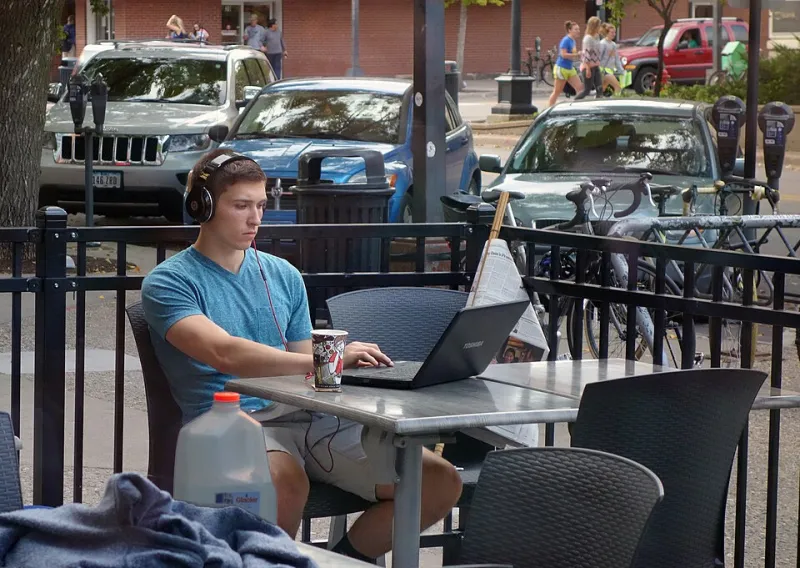
Photo: student planning calendar with scholarship deadlines and laptop, via scholarship.sunway.edu.my
Why Most Students Apply to the Wrong Scholarships First
Every fall, students across the United States funnel their energy into a small number of well-advertised national scholarships — the Coca-Cola Scholars Program, the Gates Scholarship, the Horatio Alger Award. These are legitimate, life-changing opportunities. They are also extraordinarily competitive, with acceptance rates that routinely fall below one percent.
Meanwhile, thousands of state-level, regional, and community-based scholarships go underfunded or entirely unclaimed each year — not because students are ineligible, but because the deadlines pass unnoticed. For students serious about building a funding portfolio, the regional calendar is where the highest-probability opportunities live.
This guide is designed to help you build that calendar before the 2024–2025 cycle closes around you.
Understanding Why Regional Deadlines Are Easy to Miss
National scholarships invest in marketing. They have communications teams, social media presences, and relationships with high school guidance counselors. Regional awards, by contrast, are often administered by small foundations, professional associations, credit unions, or state agencies with limited outreach capacity.
Many regional scholarships are announced through local newspapers, community organization newsletters, library bulletin boards, or state agency websites that students rarely visit. Some are posted only to a single college's financial aid portal. Others are communicated exclusively through high school counselors who may not have the bandwidth to notify every eligible student.
The result is a structural information gap — and students who know how to close it gain a measurable competitive advantage.
A Regional Snapshot: Key Deadlines by State Cluster
The following overview covers representative award categories and typical deadline windows. Because scholarship programs adjust their cycles annually, students should verify current dates directly with sponsoring organizations. Use this section as a planning framework, not a confirmed schedule.
Northeast (ME, NH, VT, MA, RI, CT, NY, NJ, PA) Community foundations in this region — including the Maine Community Foundation, the New Hampshire Charitable Foundation, and the New York Community Trust — typically open applications in November and December for awards with February and March deadlines. State-based nursing and education scholarships in New York and Pennsylvania frequently carry January 15 deadlines that fall during winter break, when students are least likely to be monitoring their email.
Southeast (VA, NC, SC, GA, FL, AL, MS, TN, KY, WV) Several Southeastern states administer need-based grant programs through their higher education commissions with priority deadlines in late January. Florida's Benacquisto Scholarship and Georgia's HOPE Scholarship have distinct institutional deadlines that differ from the FAFSA priority date. Students in this region should also monitor awards from agricultural extension programs and rural development organizations, which frequently carry rolling deadlines and low competition.
Midwest (OH, IN, IL, MI, WI, MN, IA, MO, ND, SD, NE, KS) The Midwest is home to a dense network of community foundation scholarships, many of which open in December and close in February. The Chicago Community Trust, the Minneapolis Foundation, and the Greater Kansas City Community Foundation all administer multiple awards annually. Credit union scholarships — particularly through state leagues affiliated with the Credit Union National Association — are also prevalent in this region and close as early as January 31.
Southwest (TX, OK, AR, LA, NM, AZ) Texas alone has more than 200 state-specific scholarship programs administered through the Texas Higher Education Coordinating Board, with TASFA and FAFSA priority dates falling in mid-January for many institutional awards. New Mexico's Legislative Lottery Scholarship and Arizona's private foundation awards carry deadlines that cluster in February. Students in Louisiana should note that the Taylor Opportunity Program for Students (TOPS) has an annual renewal deadline that is separate from initial application timelines.
Mountain West and Pacific (CO, WY, MT, ID, UT, NV, CA, OR, WA, AK, HI) California's Cal Grant program has a March 2 FAFSA verification deadline that is distinct from — and earlier than — what many students expect. Oregon's Promise Grant and Washington's Washington College Grant both have priority filing dates in January. Alaska and Hawaii have smaller but less competitive state scholarship pools; the Alaska Commission on Postsecondary Education administers multiple awards with February deadlines that routinely go underfilled.
Rolling Applications: The Overlooked Category
Beyond fixed-deadline awards, a meaningful number of scholarships operate on rolling admissions models — meaning applications are reviewed and funded as they arrive, rather than in a single competitive cohort. These programs are often the most accessible for students who are building their scholarship strategy mid-cycle.
Organizations offering rolling scholarships include many professional associations (in fields such as accounting, social work, and information technology), some faith-based foundations, and a number of employer-sponsored programs. The key advantage of rolling awards is that early applicants face less competition; the pool grows as the academic year progresses.
A practical approach: identify three to five rolling scholarships in your field of interest and submit applications before December 1, regardless of when you began your search.
Building Your Personal Deadline Calendar
The most effective scholarship applicants treat their funding search the way a professional manages a project — with documented deadlines, task assignments, and built-in review periods. The following framework is a starting point.
September–October: Complete or update your FAFSA as early as possible after October 1. Research state grant programs in your home state and your intended enrollment state. Identify three to five regional community foundations serving your county or metropolitan area.
November–December: Submit applications for rolling scholarships. Begin drafting essays for awards with February and March deadlines. Request letters of recommendation no later than six weeks before the earliest deadline you are targeting.
January–February: This is the highest-concentration deadline window for regional awards. Treat every week as a priority period. Confirm that all submitted materials have been received.
March–April: Many lesser-known awards open during this period as larger programs close. Continue monitoring your state's higher education agency website and your intended college's financial aid portal for newly posted opportunities.
The Strategic Case for Applying Regionally First
The acceptance rate differential between regional and national scholarships is not marginal — it is often the difference between a one-in-a-thousand shot and a one-in-twenty shot. Students who build their strategy around regional awards, treat local community foundations as a primary resource, and submit applications ahead of peak competition windows will consistently outperform peers who pursue only nationally advertised programs.
At The Scholarship Center, our guidance is consistent: the funding is out there, but it rewards the students who look for it early, look for it locally, and look for it systematically. Your 2024–2025 calendar starts now.